Digital advertising is one of the most powerful levers a business can pull. But it is also one of the most misunderstood. Between Google Ads, Meta Ads, attribution models, bidding strategies, and a dashboard full of acronyms, it is easy to lose the plot. This guide changes that.
How Our Client Scaled Revenue with Smart Google and Meta Ads: A Case Study
Dylan Rae Jewelry has always had a great product. The designs resonate. The brand has appeal. But earlier this year, their paid ads weren’t keeping up. Despite getting traffic, the conversions weren’t where they needed to be and the return on ad spend (ROAS) wasn’t justifying the budget. That’s when we stepped in to reshape their entire advertising strategy.
Dylan Rae Jewelry isn’t just another boutique brand; they’ve mastered the art of everyday luxury. Their pieces strike the perfect balance between timeless elegance and bold individuality, making dylanraejewelry.com a go-to destination for women who want jewelry that speaks their style, not just trends.
What followed was a sharp turnaround: more clicks, lower costs, and a big lift in purchases. This is a look behind the curtain at how our strategy transformed the brand’s paid ads into a serious sales machine.
The Problem: Wasted Clicks and Stagnant ROAS
At the start of the campaign, Dylan Rae was running ads but the returns were flat. Clicks were coming in, but not translating into purchases. ROAS hovered in the “meh” zone, and there was no clear funnel structure in place. Ad dollars were being spent, but not working hard enough. Our job was to change that quickly and efficiently.
The Strategy: Funnel Clarity, Creative Testing, and Smarter Targeting
We built a two-platform strategy using Meta (Facebook and Instagram) for discovery and retargeting, and Google Ads for high-intent capture. But it wasn’t just about running more ads. We redesigned the entire structure around three key principles:
- Focus on Purchase-Driven Metrics: No more optimizing for link clicks or reach. We went straight to purchase objectives with tROAS and target CPA campaigns.
- Creative Variation: We tested video and image ads across different audiences to identify what grabbed attention and converted best.
- Audience Intelligence: Using lookalike audiences (LALs) based on purchases and add-to-cart behavior, we began narrowing in on the people most likely to buy.
We also launched a Google Performance Max (PMax) campaign with a target ROAS of 300%, leveraging dynamic creative and intent-based channels like YouTube, Shopping, and Gmail to reach shoppers throughout the funnel.
What the Numbers Say: A Campaign in Motion
The results speak for themselves. Here’s what happened over the course of the month.
-
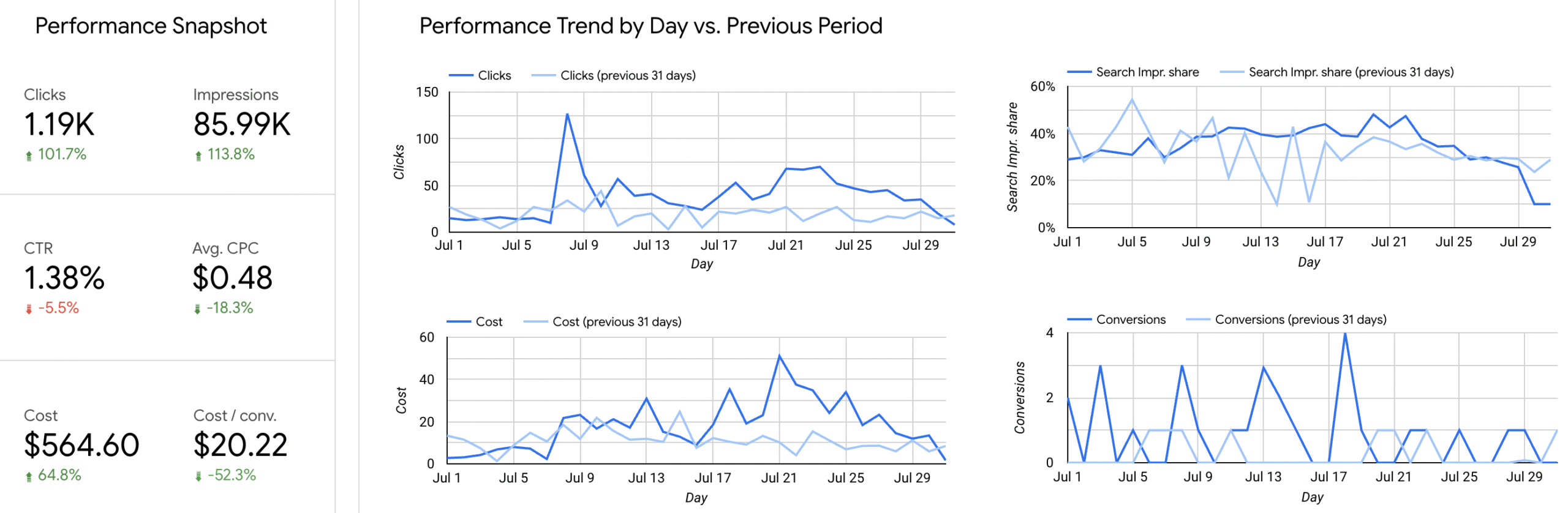
- Clicks doubled from 592 to 1,190.
- Impressions more than doubled from 40K to 85.7K.
- Cost per conversion dropped from $42.40 to just $20.16, a 52.5% improvement.
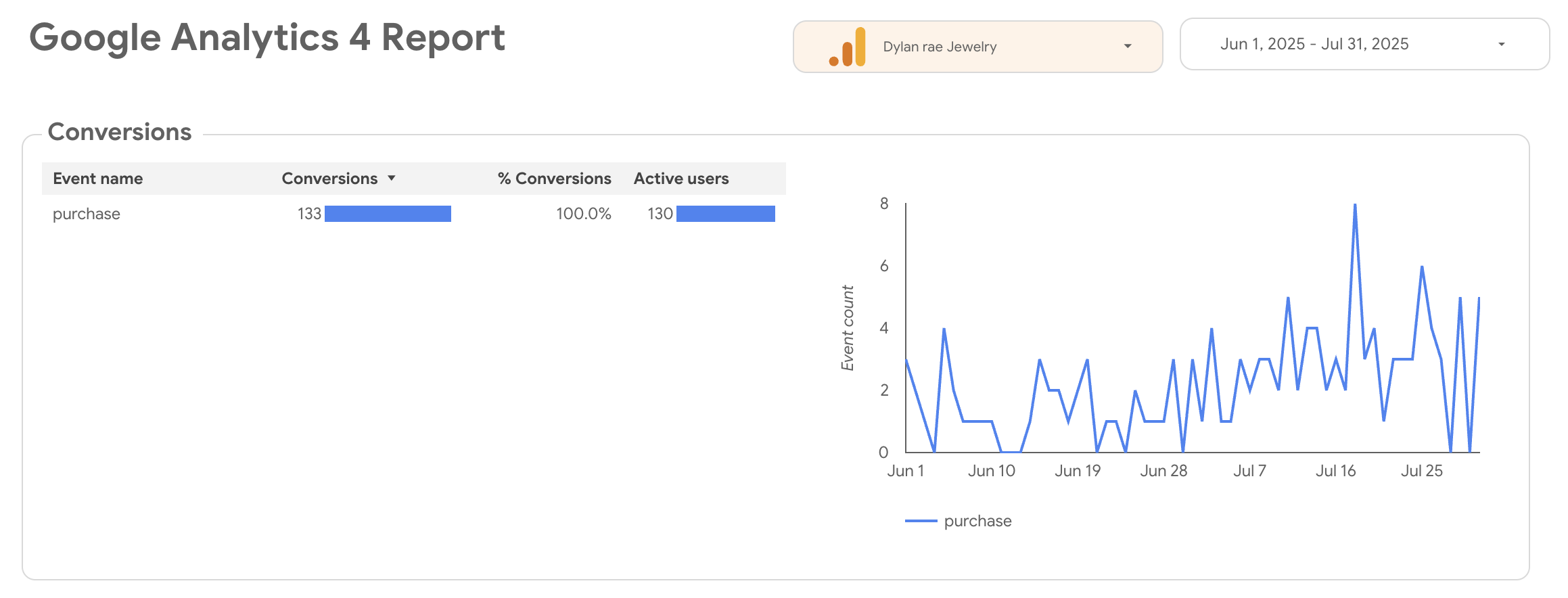
- Total conversions hit 130 overall purchasers.
- Average CPC dropped by 18.3%, saving more money per visitor.
Even though CTR dropped slightly (from 1.46% to 1.38%), it was expected with impression scaling. We were reaching a much larger audience, and still converting better than before.
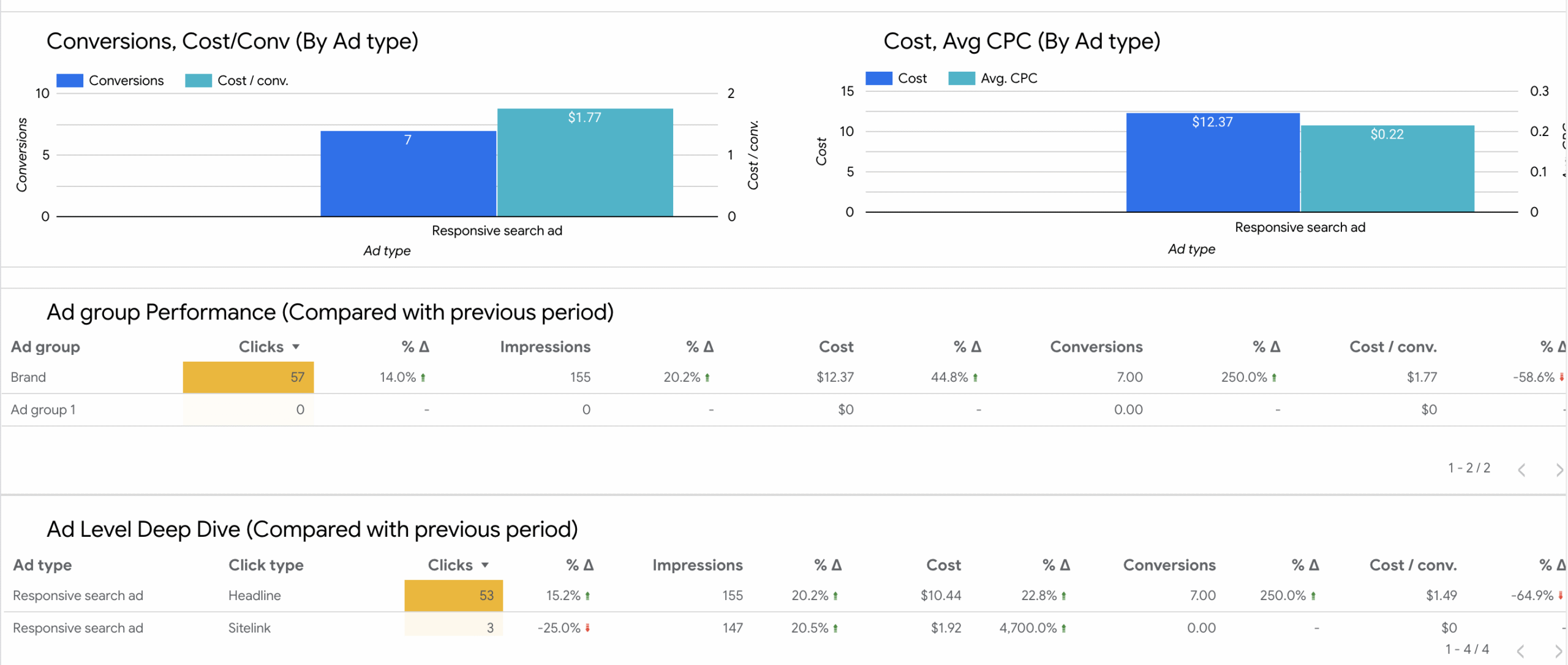
On the Google side, our branded search campaigns crushed it driving 7 conversions at only $1.77 per sale with a quality score of 9. This wasn’t traffic for the sake of traffic, it was high-intent, purchase-ready users.
On Meta, over just 7 days of video ad testing, we generated 3 sales and a ROAS of 2.02. Across the entire 30-day cycle, both video and image ads hovered around a consistent ROAS between 1.34 and 1.44, giving us a solid foundation for scaling.
We didn’t stop there. Our bottom-of-funnel Meta campaign was optimized not for clicks, but for purchases with tROAS and CPA bidding doing the heavy lifting. This shifted the focus entirely to outcomes, not activity.
Device Optimization: The Mobile Majority
One key insight? Mobile was king.
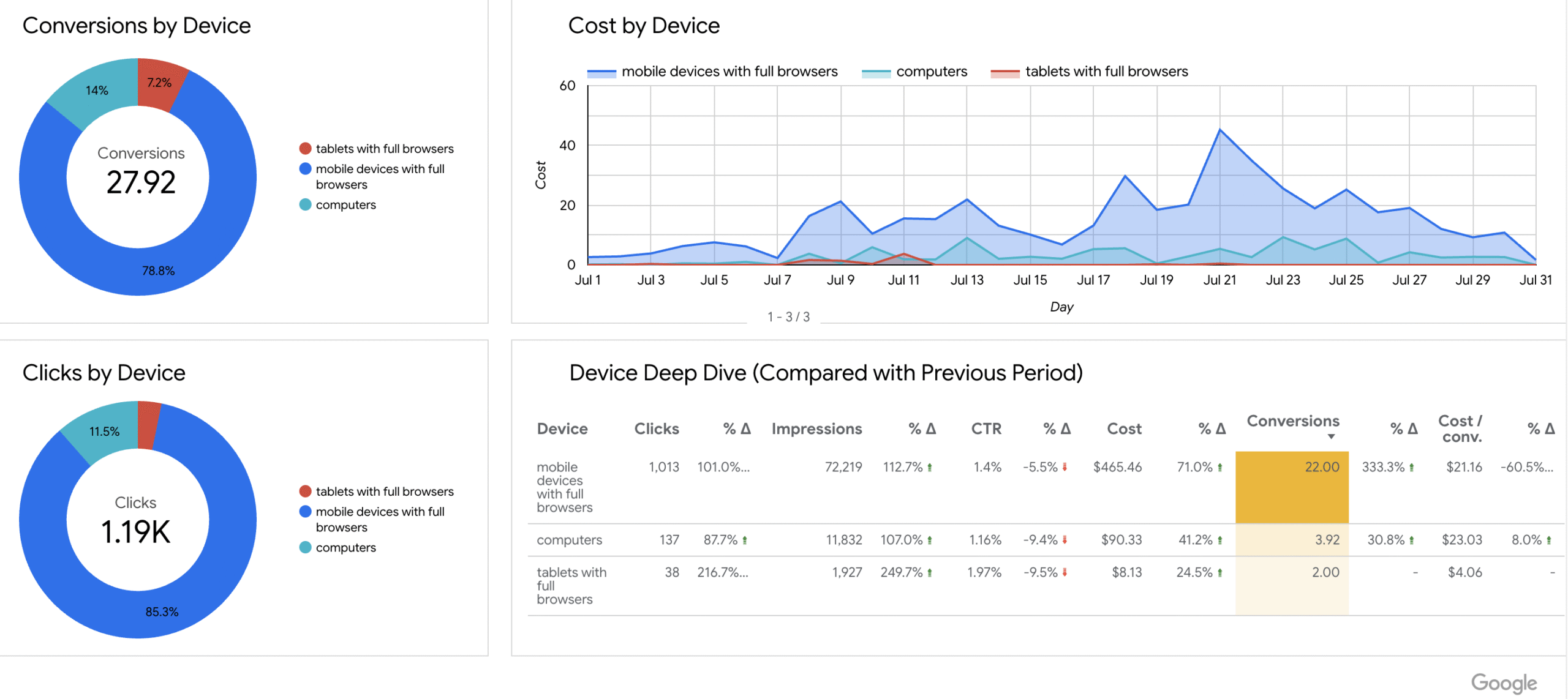
78% of all conversions came from mobile users. That told us everything we needed to know about our future creative and landing page design make it mobile-first or don’t bother. The cost per mobile conversion was also the lowest across all device types, further proving where our budget belonged.
The Turnaround: From Spending to Scaling
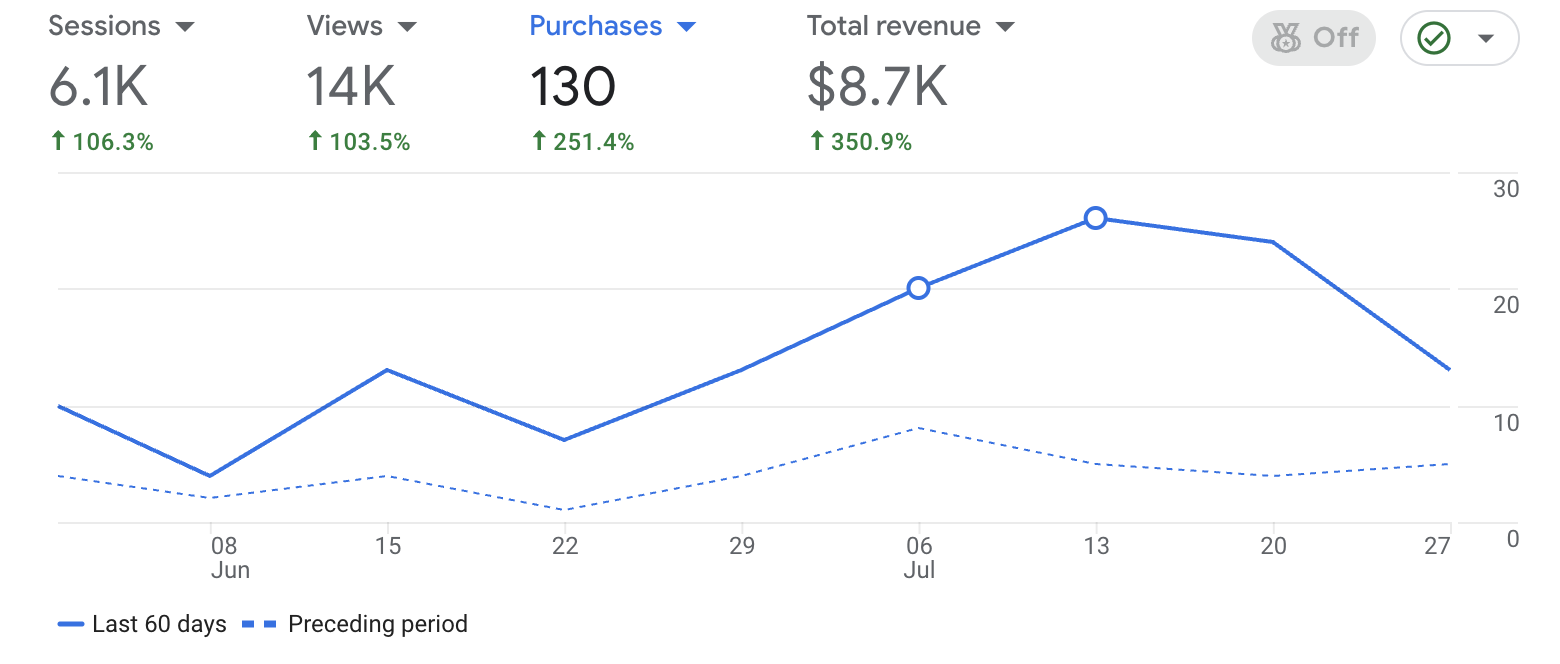
So what’s the final verdict? Let’s get to what matters. Here’s what we achieved over the last 60 days:
-
- Sessions: 6,100 (↑ 106.3%)
- Views: 14,000 (↑ 103.5%)
- Purchases: 130 (↑ 251.4%)
- Revenue: $8,700 (↑ 350.9%)
For context: the preceding period barely crossed 40 purchases. We more than tripled that.
-
- ROAS climbed sharply across both platforms
- Revenue increased
- CPC dropped
- Conversions rose
- Efficiency improved in every key metric
But more than numbers, there’s a story here, about strategy, execution, and clarity. This wasn’t magic. It was structure. We gave the campaign a clear funnel, tested the right creatives, chased real conversions, and stopped wasting money on clicks that didn’t matter.
The growth I’ve seen in both ad performance and brand visibility has been game-changing.– Danielle Ambrosio, Owner and Designer at Dylan Rae Jewelry
How Griffon Webstudios Can Help You Soar
At Griffon Webstudios, we don’t just run ads. We build revenue engines. Our approach combines data, creativity, and relentless testing to craft ad strategies that actually convert. Whether it’s Google, Meta, or a full-funnel system tailored to your brand, we focus on the metrics that matter like ROAS, conversions, and growth.
We help businesses go from guesswork to clarity, scaling campaigns that bring real, measurable returns. If you’re ready to turn clicks into customers and budgets into breakthroughs, we’re the team that makes it happen.

The Ultimate Meta Ads Strategy Guide
Digital advertising has seen Meta Ads emerge as a leading tool to generate growth for all market sectors. Today’s advertising success requires more than standard post boosting or campaign duplication because the market has become more competitive and algorithms continue to change as artificial intelligence gains prominence.
Brands can maximize Meta’s future capabilities by using a strategic full-funnel strategy that combines creative mastery with intelligent targeting methods and analytical insights. Here’s a comprehensive Meta Ads strategy to achieve sustainable performance within the current market landscape.
Building a High-Converting Full-Funnel Ad Strategy
The Top-of-funnel Strategy (TOF) focuses on awareness generation through Reels and short video content and lead generation forms which drive soft engagement. Use Campaign Budget Optimization (CBO) to enable Meta’s AI system to distribute funds between different creative variations while testing various creative assets at a large scale.
Middle-of-funnel (MOF) includes showing ad sets containing product demo, testimonials and case studies and value-based content to users who previously interacted with content. These ads should answer the question: “Why should I trust this brand?”
The final stage of the funnel- Bottom-of-funnel (BOF) campaigns should focus on conversion rates. Target users who placed items in their shopping cart or started the checkout process or returned to your website repeatedly. The conversion process depends heavily on urgency tactics, exclusive offers and strong call-to-actions at this stage. The ad formats should include dynamic product ads and catalog sales enabling users to receive personalized recommendations which guide them directly to purchase.
Choose your tests wisely by employing Ad Set Budget Optimization (ABO) for creative discovery before moving winning sets to either Campaign Budget Optimization (CBO) or Bid Cap for scaling purposes (set manual caps at 10-20% above average cost-per-result).
The Role of Creative in Driving Ad Performance
Meta Ads performance heavily depends on creative elements which represent the strongest possible control mechanism. Multiple research findings demonstrate that creative elements determine 80% of advertising success according to both expert opinions and studies. The AI-powered advertising space requires more than one excellent visual or video for success. You need volume and variation.
Meta favors brands that consistently deliver fresh creative—especially short vertical videos that capture attention within the first two seconds.
Your team should develop the creative remixing method which many marketers now refer to as a process. The process begins with the development of winning base assets which need weekly modification through headline changes and introduction updates and visual transformations and CTA rewording.
Your testing efforts should explore multiple user-generated content (UGC) formats together with talking-head videos as well as animated explainers and lifestyle shots. The creative process becomes more efficient through the utilization of Meta’s platform tools alongside AI-based design solutions.
Targeting Strategies: Smart, Broad, and Adaptive
A combination of broad targeting with Meta optimization allows algorithms to discover buyers instead of depending on specific interest-based targeting. Your first step should involve broad targeting followed by the addition of retargeting campaigns for users who visit your site and people who engage with your content and similar audiences.
The exclusion method requires you to prevent past converters from being targeted in prospecting campaigns and simultaneously block prospecting audiences from retargeting campaigns.
AI-enhanced targeting: Meta’s advancements allow real-time personalization (e.g., dynamic creative per geolocation, device usage)
Budgeting, Bidding, and Scaling with Precision
The success of your Meta Ads strategy depends on maintaining a systematic budgeting structure and bidding plan. The initial testing phase demands budgets ranging from $30 to $50 daily per campaign before you can expand based on performance metrics. Budget increases that push too high will cause your learning phases to reset while disrupting your results. The recommended increase should not exceed 15-20% over every 48-hour period.
When you scale successful campaigns, you should activate Campaign Budget Optimization (CBO) to enable Meta to distribute funds automatically between your best-performing ad sets. The introduction of manual bid caps functions for advanced scaling methods.
You need to calculate your break-even cost per acquisition (CPA) as a fundamental strategy which remains underrepresented yet essential. The calculation of your sale or lead cost per acquisition determines your maximum investment level for maintaining profitability. You should use this figure to check ad performance while making decisions about scaling or cutting your advertising budget.
Measuring Success and Making Data-Driven Optimizations
Running Meta Ads without precise measurement is as risky as driving blindfolded. Your performance metrics need to differ according to the stage of the funnel. TOF campaign success depends on reaching your audience while videos play and users engage with content. MOF campaigns should track add-to-cart percentages together with landing page dwell time and form entry numbers. Your BOF campaign success depends on three core metrics: return on ad spend (ROAS), conversion rate and cost per acquisition (CPA).
The main difference between ordinary and successful campaigns is in their ability to be continuously optimized. Make single variable changes at a time between headline options and image choices and audience selection and placement choices. Use Meta’s reporting tools to get detailed breakdowns of your audience across age groups and gender and device and location. The analysis provides the capability to boost successful elements while removing non-performing aspects.
Examine your attribution settings in detail because they need careful attention. Some advertisers achieve better high-intent behavioral results through switching to the 1-day click attribution period which replaces the default 7-day click period of Meta. The performance of UTM parameters across platforms enables you to track data which you can connect with Google Analytics and Triple Whale tools for multi-touch attribution purposes.
Staying Compliant and Future-Ready
Advertisers must follow Meta’s new ad policies and enhanced transparency measures to maintain full compliance with the platform. The compliance rules require advertisers to avoid false statements and include proper warnings for financial and health-related ads while maintaining current business information in Meta Business Manager. Account suspension and reduced delivery become possible when your ads break policies or receive negative feedback.
Your Meta Ads strategy needs a future-proofing strategy to remain competitive. The Meta platform has begun testing AI-based automated campaign creation which allows advertisers to enter their goals and budgets and brand assets so the system produces customized campaigns. The upcoming shift requires you to organize your creative assets and product catalogs along with user data through structured systems. Meta’s AI system will use your materials more efficiently because of this structured approach.
The Winning Strategy
Meta Ads success depends on more than just quick fixes or workarounds. The algorithm requires the right creative materials and data input while continuously responding to performance signals for effective operation. Brands that maintain agility while being transparent and data-driven will thrive in the digital ecosystem while automation and AI become prominent.