
For years, marketing followed a familiar pattern. Run a campaign, see a spike, measure the results, then repeat. It worked, but it was always a cycle of building up and tearing down.
By 2025, many of the strategies that used to work just weren’t delivering. Attention spans kept shrinking, results were harder to sustain, and the old playbook started to fall short. Instead of relying on big, noisy campaigns, the shift moved toward being present all the time, quietly, but consistently.
The transition occurred without any prior indication that it would. It just happened.
Campaigns worked when attention was easier to capture
There were fewer channels, decisions took longer, and it was easier to see what worked. If you had a strong idea and enough budget, you could own the moment.
That environment is gone now.
Today, customers find brands in all kinds of places- search results, AI summaries, social feeds, reviews, emails, and recommendations. By the time they see a promotion, they may have already made up their mind.
Campaigns haven’t stopped working. They’ve just lost their monopoly on influence.
Always-on doesn’t mean “always posting.”
Here’s the thing: always-on marketing is often misunderstood. It’s not about churning out endless posts, ads, or emails. That just burns out your team and makes your message less effective.
Real always-on marketing works quietly, in the background.
The key point here is to show up consistently in the right places when customers are looking for answers, whether that’s through search, AI tools, social media, or direct contact. You don’t need to be everywhere, just where it matters.
Now, it’s more about staying focused than pushing hard.
Buyers no longer arrive at the same moment
Campaigns assume everyone is paying attention at once. That’s rarely true anymore. Buying journeys are unpredictable and spread out over time.
People learn in fragments:
- A search today
- AI summary tomorrow
- Recommendation next week
- Visit much later
If you only show up during campaigns, you risk disappearing in between. Always-on presence keeps you connected with customers throughout their journey, building trust that lasts beyond a quick sale.
Always-on marketing compounds quietly
The main benefit of continuous marketing is steady results instead of big spikes. It’s about building up over time.
Small, consistent signals help people get familiar with your brand. When people know you, decisions come easier. The brand becomes an easy choice, even if customers can’t explain exactly why.
Always-on strategies may seem slow at first, but over time, they deliver better results than campaigns. They build lasting memories, not just numbers.
Performance doesn’t disappear, it shifts
This doesn’t mean performance marketing is obsolete. It means performance relies more heavily on groundwork.
Paid campaigns convert better when:
- The existing brand messaging is well known to consumers.
- The website confirms expectations quickly
- Trust signals exist before the click
Without this foundation, campaigns have to work harder for less. With it, performance improves even as budgets stay steady.
Always-on marketing doesn’t replace campaigns. Instead, it helps the whole system work better.
Measurement needs a wider lens
People find the transition hard because they measure results differently. Campaigns are easy to track, but always-on influence is harder to spot since it’s always running.
Brands that focus only on short-term metrics miss the real improvements happening in their business.
- higher-quality leads
- faster sales cycles
- more direct brand searches
- better conversion rates from the same traffic
You’ll notice the effects as steady progress, not sudden jumps.
What this means for businesses now
It is easy to focus on the next campaign launch. However, consider what occurs when someone encounters your brand unexpectedly.
Inconsistency across campaigns creates gaps in marketing efforts, leading to confusion and missed opportunities. The key is to remain focused. Avoid producing unnecessary content.
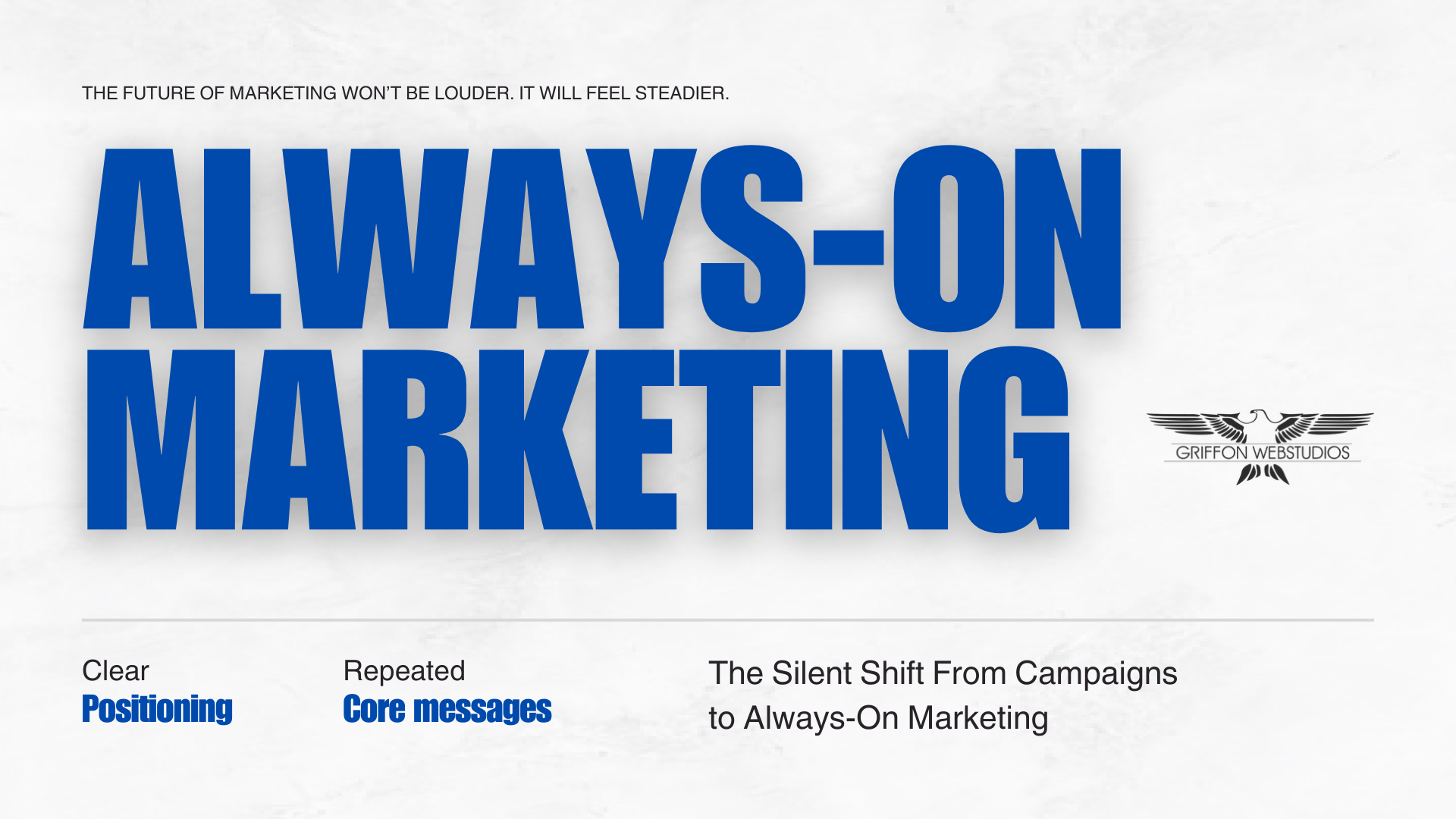
- Clear positioning
- Repeated core messages.
- A reliable presence in key discovery moments
- A website built for confirmation
Many brands are now bringing together marketing, UX, content, and data
The future of marketing won’t be louder. It will feel steadier. Brands that adapt will see more sustainable growth. They’ll reach customers who are getting harder to find.