
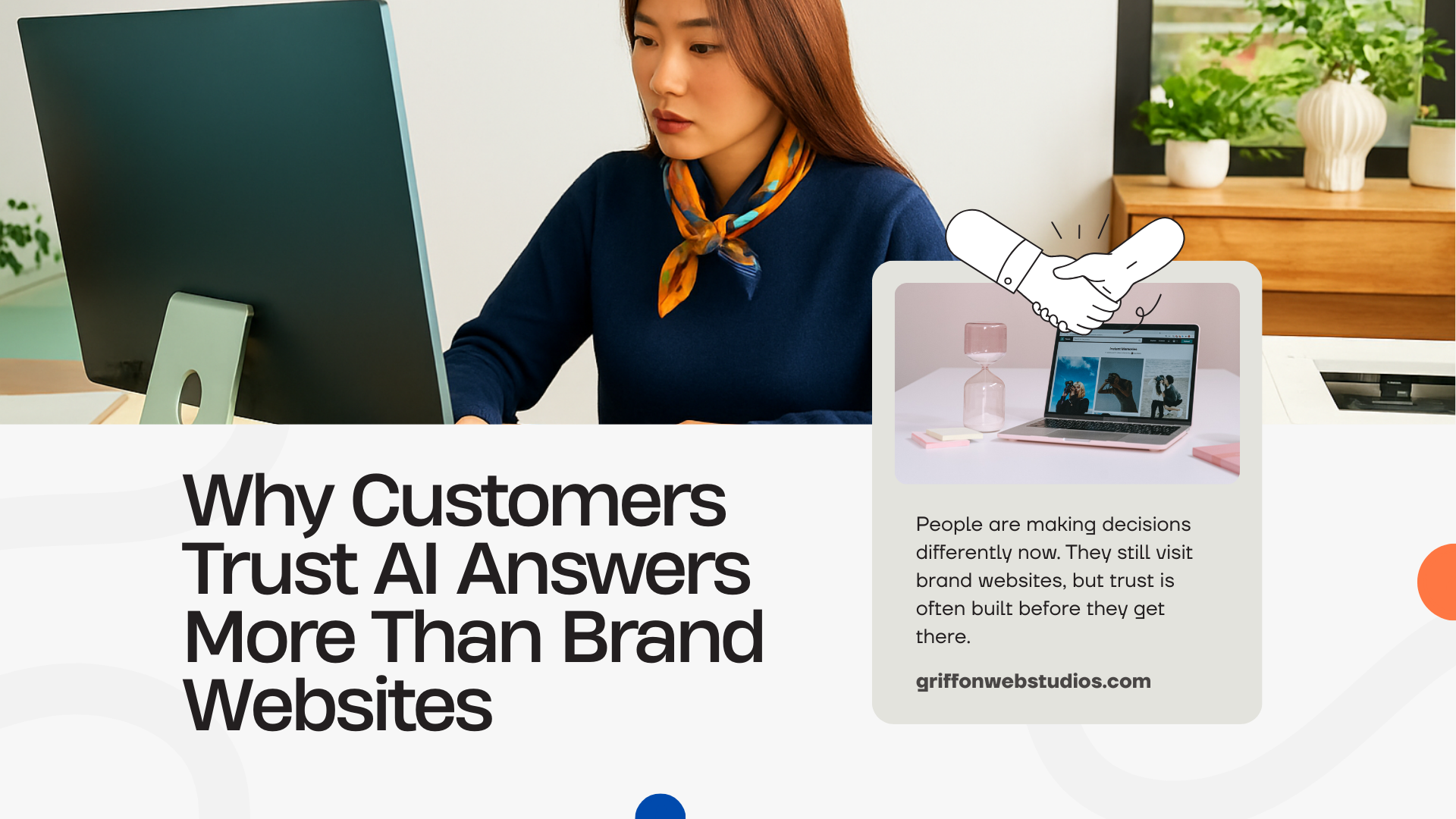
People are making decisions differently now. They still visit brand websites, but trust is often built before they get there. Most people use AI tools, search summaries, and quick answers to sort through their options. They read, compare, and narrow things down before ever clicking through to a brand’s site. By the time they arrive, they’ve usually made up their minds or are close to it.
This is a crisis of trust, not technology.
AI feels neutral. Brand websites don’t.
When someone visits a brand’s website, it’s obvious the content is written by the brand. The goal is to persuade. Even if the facts are accurate, the intent is clear.
AI answers feel different.
AI answers show up as summaries, comparisons, or explanations, not sales pitches. There’s no call to action, no banners, no obvious sales talk. The tone feels neutral and balanced. Whether that’s truly the case is another question, but the perception of neutrality is what matters here.
People tend to trust information they see as objective, especially when they’re comparing options.
Speed and effort matter more than depth
AI answers build trust by making the process simpler and helping users understand information more easily.
Reading several long blog posts, learning marketing terms, and comparing product features takes a lot of time. AI tools can create short summaries, saving users from extra work. The answer just needs to be good enough for a decision, even if it’s not perfect.
People don’t need detailed research results in their searches anymore. They want:
- clarity
- direction
- reassurance
AI provides these things faster than most websites.
Customers aren’t leaving websites; they’re using them differently.
Many brands don’t see what’s really happening at this stage.
People still visit websites, but their purpose has changed. In the past, websites helped build trust. Now, they confirm trust that’s already been established.
Users feel more confident when a website matches what they’ve already seen in AI summaries, search results, or peer discussions. If the site doesn’t match, users lose trust and leave quickly.
This is why many businesses see:
- lower time on site
- faster decisions
- Websites have high bounce rates because users are ready to buy.
Generic messaging collapses under AI summaries
AI tools don’t value nuance. They condense information.
When AI summarizes brand websites, it often turns unique claims into the same generic phrases like ‘full-service’ or ‘custom solutions.’ The differences between brands get lost. In the end, everyone sounds the same.
The trust between people breaks down at this point.
AI answers get more trust when brands are generic, because there’s nothing specific to work with. Brands that stick to clear, concrete details are more likely to stand out, even when information gets compressed.
Authority now travels beyond owned platforms
Authority used to live on your own website. Now, it’s spread across many channels.
It shows up in:
- The number of times your professional expertise appears across the entire internet.
- whether your explanations are clear enough to be summarized accurately
- whether your brand has a recognizable point of view
People trust AI answers because they pull from many sources, not just one. If a brand only shows up on its own site, it’s hard to build real trust.
What this means for businesses
The way people interact with information is changing. Building trust now means meeting people where they are, not forcing them through extra steps.
That means:
- explaining what you do in plain, specific language
- avoiding inflated or interchangeable claims
- What you say on your website should line up with how you describe your brand everywhere else.
- Website design should help people do what they already want to do, not make them change how they work.
Trust now forms upstream. Websites that assume users are starting from zero are out of sync with reality.
The quiet opportunity
The brands that succeed in this environment won’t be the loudest. They’ll be the clearest.
Their value will be clear, even after information gets compressed. Their online presence will reach people who already know what they offer.
Now, the focus is on connecting strategy, messaging, and user experience so the digital presence actually works.
We’ve seen this play out with our clients at Griffon Webstudios. When websites confirm what people already know rather than over-explain, trust goes up, and conversion rates improve, even if traffic patterns change.